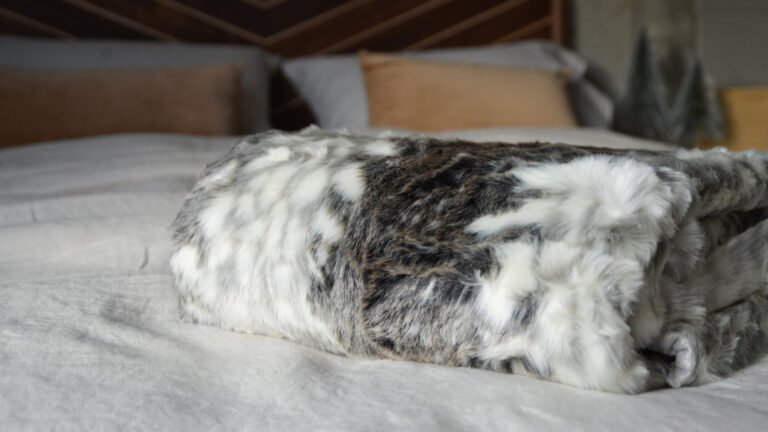
To wash a faux fur coat, or any other faux fur, use cold or lukewarm water (30°C at most), a gentle detergent and no fabric conditioner. Hand washing is best, but you can also put it in the machine on a wool cycle, turned inside out in a mesh bag, on the lowest spin. Let it air dry, never in the tumble dryer or on a radiator, then brush it once it’s dry to fluff the pile back up.
Heat is the one thing to avoid, because acrylic fibres frizz and melt long before cotton would come to any harm. Anything else can be put right. Here’s how to do it, item by item, plus what to do with real fur, which never goes in water.
Before you wash: check the care label
The care label trumps any general advice, and four symbols matter.
| Symbol | What it means |
|---|---|
| Washtub with a hand | Hand wash only |
| Washtub with a number | Maximum machine temperature, usually 30 |
| Square with a circle inside, crossed out | Do not tumble dry |
| Circle with a P or F | Can be dry cleaned |
If a collar, hood or trim comes off, wash it on its own. These are the parts that get dirty fastest, and the rest of the garment often only needs a brush.
Hand washing: the safest method
- Fill a basin or the bath with cold or lukewarm water, no warmer than 30°C.
- Add a small amount of wool or delicates detergent. Don’t use fabric conditioner, which makes the pile sticky.
- Put the garment in and squeeze it gently, without rubbing or wringing. Leave it to soak for about 15 minutes.
- Rinse in clean water at the same temperature until there are no more suds.
- Press the water out, then roll it up in a large towel to soak up the rest. Never wring it.
Machine washing: when you can
The machine is fine for short-pile and small items such as teddy, blanket hoodies, throws and cushions. Hand wash a long-pile coat or take it to the dry cleaner’s.
- wool, delicates or hand wash cycle;
- 30°C maximum, or cold;
- turned inside out, with zips and fastenings done up, in a large mesh laundry bag;
- spin on the lowest setting, or off;
- a lightly loaded drum, so it doesn’t rub.
Drying: where most damage happens
When faux fur gets ruined, it nearly always happens while it’s drying. Synthetic fibres soften with heat, so in a tumble dryer or on a radiator, the pile frizzes, tangles and goes hard. That damage is permanent.
Small items dry flat on a towel, turned over halfway. Coats and jackets dry on a wide hanger that supports the shoulders, in a well-aired room. A thick coat can easily take a day or two.
To speed things up, use a hairdryer on the cool setting, held about 20cm away. Never use hot air.
Brushing to fluff it back up
Once it’s completely dry, give it a shake, then go over it with a wide-tooth brush or a pet brush with soft pins. Brush with the pile first, then lightly against it to lift it, and finish with the pile again.
If some patches stay flat or matted, see our guides on how to revive faux fur and how to keep faux fur from shedding.
Stains, smells and rain
Fresh stains. Dab them, without rubbing, using a damp cloth and a drop of gentle soap, then rinse with a clean damp cloth. Rubbing pushes the stain in and tangles the pile.
Smells. Treat these dry. Sprinkle bicarbonate of soda over the pile, leave it overnight, then shake and brush it out. It also lifts light greasy marks on a collar.
Rain. Give it a shake, hang it on a hanger away from any heat, and brush it once it’s dry. Faux fur copes with water far better than real fur does. The only real risk is heat while it dries.
Item by item
Long-pile coats and jackets. Hand wash or dry clean. Take off the hood and collar if they’re detachable.
Teddy and sherpa. These can go in the machine, inside out, in a mesh bag. They’re the easiest to look after, but also the quickest to bobble where they rub.
Throws and blankets. Machine washable if the drum is big enough for the throw to move freely. If not, use a launderette with large machines. See how to wash a faux fur throw and our faux fur throw guide.
Rugs. Small ones by hand or in the machine, depending on the label, and large ones at the dry cleaner’s. Our faux fur rug guide covers everyday care.
Damaged hoods. See how to fix a damaged faux fur hood.
Can you wash real fur?
Real fur should never go in the washing machine, or in water at all. The hair would be fine, but the skin it grows from isn’t. Once it’s been wet and dried, the skin hardens, shrinks and can split, and by then the garment is ruined.
Real fur needs cleaning by a furrier, who tumbles it in a drum with a special sawdust. Keep bicarbonate of soda and home remedies away from animal skin. If you’re not sure what yours is made of, our guide on how to tell if fur is real will settle it in a few seconds.
Storing it between seasons
Put it away clean and completely dry, on a wide hanger, in a breathable fabric garment bag. Never use plastic, which traps moisture. Give it some space, because a coat squashed into a full wardrobe ends up with creases in the pile that are hard to get out. Kept out of direct light, pale colours won’t turn yellow.
FAQs
Can you tumble dry faux fur?
No, not even on a low heat. Heat frizzes and hardens synthetic fibres permanently. Air dry it only.
Can you iron faux fur?
No. An iron melts the pile the moment it touches it. To get creases out of a lining, iron the lining on its own, on a low setting, without ever touching the pile.
Can you dry clean faux fur?
Yes, if the label shows a circle with a P or F. Tell the dry cleaner’s it’s faux fur so they skip any heat finishing.
Can you put real fur in the washing machine?
No, never. Water damages the skin, which hardens and shrinks as it dries. Real fur has to go to a furrier.
Should you wash faux fur before wearing it?
No. Hang it up to air for a day and give it a brush. Any smell from the packaging fades in the fresh air.
Further reading
If it’s shedding: faux fur shedding, and what to do about it. On warmth: is faux fur warm?
Shop: women’s coats, men’s faux fur coats, throws, blanket hoodies.