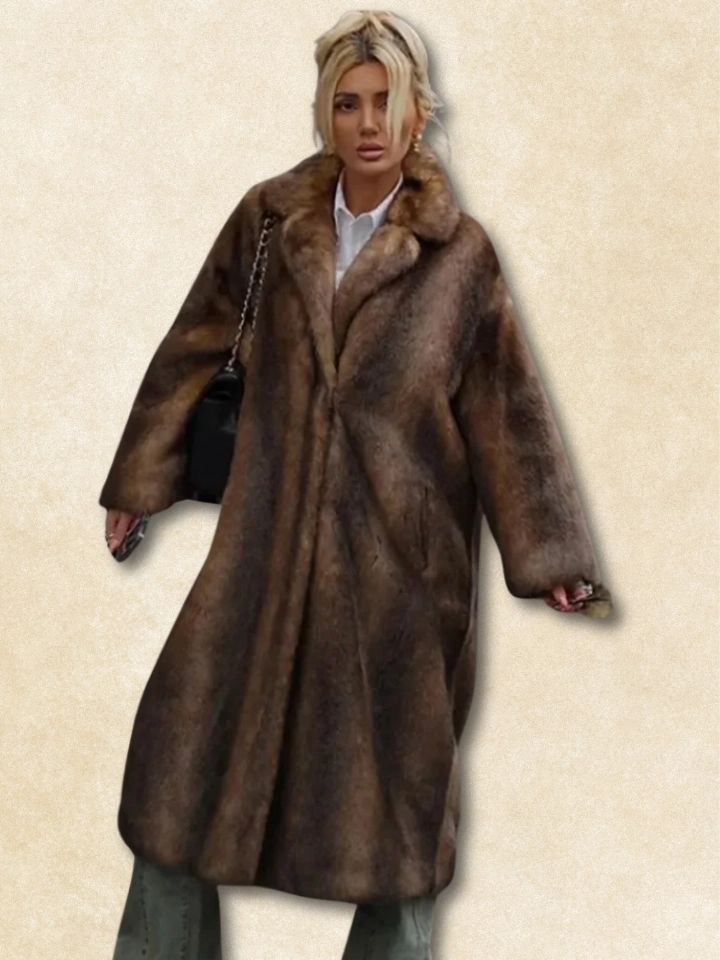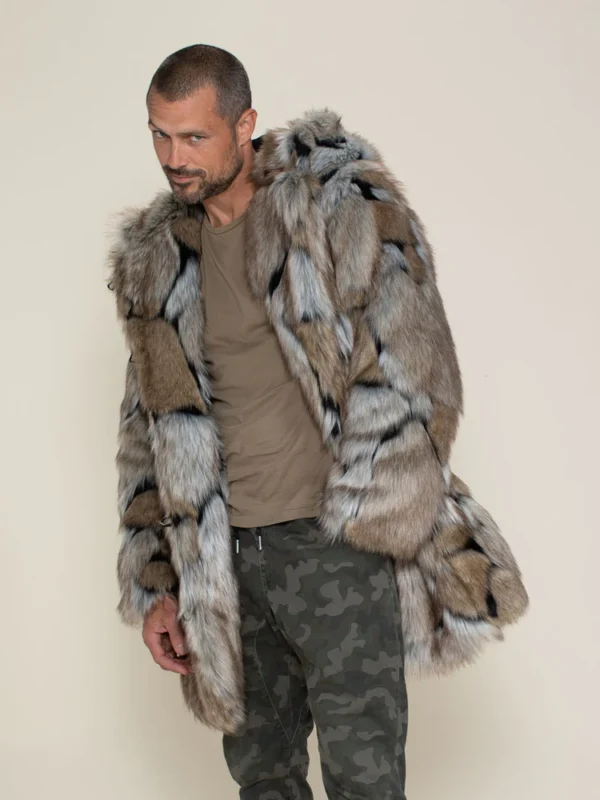
In Europe, people search for faux fur with very different words from one country to the next, and in every language the short word typed out of habit also brings up real fur. Searches for faux fur in French split two ways: in France the top search is ‘veste moumoute femme’ (teddy jacket women), while Belgium, Switzerland and Canada look first for a men’s coat or jacket. And when you ask an AI and name your country, it answers with shops from that country.
This study brings together three sources that only we hold: 12 months of Google searches in which our shop appeared (681,000 impressions), the search suggestions we collected in November 2026 to build our versions in 7 languages and our Quebec French version, and 130 questions put to ChatGPT on 24 November 2026 across 11 country versions.
Key figures
- 681,000 impressions and 5,330 clicks in Google’s results over 12 months, from 23 November 2025 to 23 November 2026.
- 81% of impressions come from France (553,168), ahead of Belgium (21,107), Canada (19,782) and Switzerland (9,115).
- In France, the top search is ‘veste moumoute femme’, with 32,648 impressions, three times as many as ‘manteau fourrure homme’ (fur coat men). The word ‘moumoute’ (French for teddy) appears in 5 of the top 10 searches.
- In Belgium, Switzerland and Canada, the top search is for men’s clothing: ‘veste en fausse fourrure pour homme’ (faux fur jacket for men), ‘manteau fausse fourrure homme’ (faux fur coat men) and ‘manteau fourrure homme’.
- In all 8 languages studied, the short word also brings up real fur or leather: fourrure, fur, bontjas, Pelz, futro, päls, pelliccia, piel.
- Across 130 questions put to ChatGPT, specific questions (animal hoods, men’s coats) get specialist shops cited, while broad questions about women’s clothing get the big chains cited.
Method and limits
These figures describe what we can see, not the whole market. Keep three things in mind when you read them:
- Search Console. An impression is one appearance of our site in Google’s results, as the official Search Console Help explains. So the figure depends on where we rank. It measures demand where we’re visible, not total demand. Our English, Dutch, Spanish, German, Polish and Swedish versions have only been live since 16 November 2026, and the Italian one since the 24th, so those countries are still under-represented.
- Search suggestions. We collected them in November 2026, country by country, to choose the vocabulary for each version, along with the titles of the pages ranking at the top in each country. They show which words people type, but they don’t give any volumes.
- ChatGPT. We wrote the 130 questions ourselves, around what our shop sells, put the country in every question and asked them on 24 November 2026. That gives our shop a better chance than it would have on questions picked at random. We publish the results as they came out, ourselves included.
Same garment, very different words
Here’s what each country calls four items, going by the search suggestions and the titles of the pages ranking at the top there. Each word links to the matching page of our shop in that language.
| Country and language | Women’s faux fur coat | Teddy | Trapper hat | Throw |
|---|---|---|---|---|
| France, Belgium, Switzerland | manteau fausse fourrure femme | veste moumoute | chapka femme | plaid fausse fourrure |
| Quebec | manteau fourrure synthétique femme | manteau teddy | chapeau de poil | jeté fausse fourrure |
| English (UK, Ireland) | faux fur coat womens | teddy coat | faux fur hat | faux fur throw |
| Dutch (Netherlands, Flanders) | faux fur jas dames | teddy jas | bontmuts | faux fur plaid |
| Spanish (Spain) | abrigo pelo sintético mujer | chaqueta borreguito | gorro de pelo | manta pelo sintético |
| German (Germany, Austria) | Kunstpelzmantel Damen | Teddyjacke | Fellmütze | Kunstfell Decke |
| Polish | sztuczne futro damskie | kurtka miś | czapka rosyjska | koc futrzany |
| Swedish | fuskpälskappa | teddyjacka | fuskpälsmössa | fuskpäls pläd |
| Italian | pelliccia sintetica donna | giacca teddy | colbacco | plaid pelliccia sintetica |
Three patterns stand out. Most countries use the English word ‘teddy’; France keeps ‘moumoute’, Spain ‘borreguito’ and Poland ‘miś’ (teddy bear), while Sweden uses ‘pilejacka’ alongside ‘teddyjacka’. Quebec writes ‘fourrure synthétique’ (synthetic fur) alongside ‘fausse fourrure’. And the trapper hat keeps a local name everywhere: ‘chapeau de poil’ in Quebec, ‘Fellmütze’ or ‘Russenmütze’ in Germany, ‘colbacco’ in Italy.
False friends: the words that mean real fur
This is the finding that matters if you’re shopping. In every language, the short word people type out of habit also brings up real fur or leather, sometimes more than anything else. We spotted these traps by reading the suggestions and the top results in each country.
| Language | Word to avoid on its own | What it brings up | What to type instead |
|---|---|---|---|
| French | fourrure (fur); in Quebec, manteau loup marin | Real fur; in Quebec, ‘loup marin’ means a coat made of real sealskin | fausse fourrure, fourrure synthétique, moumoute |
| English | fur | Real fur | faux fur |
| Dutch | bontjas | Can mean a coat made of real fur | nepbont, imitatiebont, faux fur jas |
| Spanish | piel, chaqueta piel | Mostly leather and faux leather | pelo sintético |
| German | Pelz, Fell | Real fur, animal skins | Kunstpelz, Kunstfell, Fake Fur |
| Polish | futro męskie | The top ten results are mostly real fur | sztuczne futro |
| Swedish | päls, vargpäls | ‘vargpäls’ means real wolf fur; ‘äkta’ (genuine) keeps coming up in the suggestions | fuskpäls |
| Italian | pelliccia, pelliccia lupo | Real fur; ‘pelliccia lupo’ brings up genuine Siberian wolf | pelliccia sintetica |
In France, ‘manteau fourrure homme’ gets 10,809 impressions for us, against 1,147 for ‘manteau fausse fourrure homme’. Plenty of people type ‘fourrure’ without ‘fausse’ (faux) when they’re actually looking for synthetic. The label settles it. In the European Union, a garment that contains fur or leather must carry the phrase ‘Contains non-textile parts of animal origin’, required by Article 12 of Regulation (EU) No 1007/2011. Our guide how to tell if fur is real: 6 tests covers the other checks.
French-speaking countries: four markets, two kinds of demand
The four French-speaking countries are the only ones where our data covers a full 12 months. These are the searches that brought up our shop most often, ranked by impressions:
| Country | Search | Impressions over 12 months | Average position |
|---|---|---|---|
| France | veste moumoute femme (teddy jacket women) | 32,648 | 4.8 |
| manteau fourrure homme (fur coat men) | 10,809 | 9.9 | |
| veste moumoute (teddy jacket) | 10,372 | 6.7 | |
| Belgium | veste en fausse fourrure pour homme (faux fur jacket for men) | 485 | 16.6 |
| manteaux en fausse fourrure pour hommes (faux fur coats for men) | 475 | 23.2 | |
| manteau de fourrure pour homme (fur coat for men) | 435 | 14.2 | |
| Switzerland | manteau fausse fourrure homme (faux fur coat men) | 176 | 4.9 |
| manteau fourrure homme (fur coat men) | 165 | 6.9 | |
| veste fourrure homme (fur jacket men) | 127 | 6.3 | |
| Canada | manteau fourrure homme (fur coat men) | 731 | 6.9 |
| hibou signification spirituelle (eared owl spiritual meaning) | 287 | 5.5 | |
| manteaux homme fourrure (fur coats men) | 281 | 11.7 |
What the figures show
- France is the only country where women’s styles come first. ‘Veste moumoute femme’ gets three times as many impressions there as ‘manteau fourrure homme’. In the other three countries, men’s searches take the top spots. Bear in mind that these gaps also depend on which of our pages rank well.
- Belgium and Switzerland write ‘fausse’ more often, while France and Canada leave it out. In Switzerland, ‘manteau fausse fourrure homme’ comes ahead of ‘manteau fourrure homme’. In Canada, ‘manteau fourrure homme’ gets 731 impressions, against 54 for the version with ‘fausse’.
- Belgium types full phrases. Its top searches are long and written out, often in the plural: ‘veste en fausse fourrure pour homme’, ‘manteaux en fausse fourrure pour hommes’.
- People are curious about the animals too. The spiritual meaning of animals ranks high on the lists. ‘Chouette signification spirituelle’ (owl spiritual meaning) gets 4,155 impressions in France, and ‘hibou signification spirituelle’ 287 in Canada and 98 in Switzerland. Our articles on the owl, eared owls and the snow leopard answer these searches.
- Care is a worry. In France, ‘fausse fourrure qui perd ses poils’ (faux fur shedding) puts us in first position (1.2 on average), and ‘plaid qui perd ses poils’ (shedding throw) totals 283 impressions. Once people have bought, their first concern is whether the pile will hold up. See faux fur shedding: why it happens and what to do and how to wash faux fur.
What other countries search for
For the countries outside the French-speaking world, our Google figures are still too recent. The search suggestions we collected to build each version do show what keeps coming up in each country, though.
- Poland: the hood comes before the animal. ‘Futro z kapturem’ (hooded fur) is the third suggestion for the root word ‘futro’, alongside the completions for women, long and black. Teddy is mostly called ‘miś’ there. ‘Kurtka miś’ has ten search completions, and ‘kurtka teddy’ exists too.
- Italy: demand leans towards women. ‘Pelliccia sintetica donna’ has ten completions, with ‘con cappuccio’ (hooded) first, while ‘giacca pelliccia sintetica uomo’ has only two. ‘Cappotto teddy’ first brings up a designer coat in wool and alpaca, a bias ‘giacca teddy’ doesn’t have.
- Sweden: ‘fuskpäls’ is the word shops use for synthetic, but for men ‘pälsjacka herr’ (fur jacket men) has far more completions than ‘fuskpälsjacka herr’, ‘äkta’ (genuine) among them.
- Germany: two words depending on the item, ‘Kunstpelz’ for clothing and ‘Kunstfell’ for homeware and accessories, plus ‘Fake Fur’ as a common alternative and ‘Fellimitat’ in catalogues.
- Netherlands: three words for the material, ‘faux fur’, ‘nepbont’ and ‘imitatiebont’; ‘bontjas’ on its own can mean a coat made of real fur.
- Spain: ‘pelo sintético’ for faux fur and ‘borreguito’ for teddy; ‘piel sintética’ mostly means faux leather.
What AI chatbots answer, country by country
On 24 November 2026, we put 130 shopping questions to ChatGPT, 30 for France and 10 for each of the other versions, always naming the country, as in ‘où acheter un manteau en fourrure pour homme en Suisse’ (where to buy fur coats for men in Switzerland). We recorded the shops cited as sources. So as not to advertise anyone else, they’re grouped by type.
| Country named in the question | Questions | Shops cited most often | Questions that cite our shop |
|---|---|---|---|
| France | 30 | Big international fashion chains, a French mail-order retailer | 6 |
| Switzerland (questions in French) | 10 | A Swiss fashion chain, Swiss shops | 3 |
| Switzerland (questions in German) | 10 | A Swiss fashion chain, a German department store, Swiss shops | 7 |
| Quebec and Canada (in French) | 10 | A Quebec department store, Canadian shops | 5 |
| Canada (in English) | 10 | A Quebec department store, North American chains | 5 |
| United Kingdom | 10 | British department stores, online retailers | 0 |
| Netherlands | 10 | A Dutch department store, a Dutch mail-order retailer, big chains | 2 |
| Germany | 10 | Specialist German shops, online retailers | 3 |
| Spain | 10 | A Spanish department store, big chains | 3 |
| Poland | 10 | A Polish marketplace, Polish fashion sites | 3 |
| Sweden | 10 | An international chain, Nordic fashion sites | 2 |
Three takeaways
- Naming the country changes the answer. As soon as the question names Switzerland, Canada or the Netherlands, the AI cites shops from that country first, often a local department store. For a useful answer, say which country you’re in.
- A specific question gets specialists cited. Across the 11 questions about animal hood coats, our shop is cited 10 times, and across the 38 questions about men’s coats, 18 times. Across the 38 broad questions about women’s clothing, it’s cited only 3 times, and the big chains take up almost every answer.
- The AI rarely explains its choices. Its most frequent justification is ‘my first choice’, recorded 13 times with nothing else to back it up. You still need to compare the material, sizes and price yourself.
What this means for you
- Search with the word for synthetic in your language (fausse fourrure, faux fur, Kunstpelz, sztuczne futro, fuskpäls, pelliccia sintetica, pelo sintético, nepbont), never with the short word on its own.
- When you ask an AI, name your country and the material: ‘hooded faux fur coat, delivered to Ireland’ gets more accurate answers than ‘nice fur coat’.
- Read the composition label when your order arrives, and remember that you have 14 days to change your mind about an online purchase in the European Union, as set out on the Your Europe portal.
- For teddy, our comparison of women’s teddy jackets sorts 18 styles by cut, pile and budget.
Animal hoods and men’s coats: our six top sellers
Animal hoods and men’s coats are the two subjects on which AI chatbots cite specialist shops. These are the six top-selling styles from our wolf and men’s coat sections, in order of sales.
-
Black Week -30%

Women’s grey wolf hooded faux fur coat
- Sizes
- S-XXL
Select options This product has multiple variants. The options may be chosen on the product page -
Black Week -30%
Men’s grey wolf faux fur coat with eared hood
- Sizes
- S-XXL
Select options This product has multiple variants. The options may be chosen on the product page -
Black Week -30%

Men’s Far North long silver-grey faux fur coat
- Sizes
- XS-3XL
Select options This product has multiple variants. The options may be chosen on the product page -
Black Week -30%
Men’s wolverine hooded faux fur coat
- Sizes
- S-XXL
Select options This product has multiple variants. The options may be chosen on the product page -
Black Week -30%
Women’s dark grey wolf hooded faux fur coat
- Sizes
- XXS-XXL
Select options This product has multiple variants. The options may be chosen on the product page -
Black Week -30%
Men’s lion faux fur coat
- Sizes
- M-3XL
Select options This product has multiple variants. The options may be chosen on the product page




How to cite this study
Ladovitch, ‘Faux fur in French, Spanish or German: a 2026 search study, country by country’, published on 25 November 2026, based on Search Console data for ladovitch.com (23 November 2025 to 23 November 2026), search suggestions collected in November 2026 in 8 languages and 130 questions put to ChatGPT on 24 November 2026. Free to reuse with a link to this page.
Frequently asked questions
How do you say faux fur in French, Spanish, German or Italian?
‘Fausse fourrure’ in French, ‘pelo sintético’ in Spanish, ‘Kunstpelz’ (clothing) or ‘Kunstfell’ (homeware) in German and ‘pelliccia sintetica’ in Italian. In Dutch it’s ‘nepbont’ or ‘faux fur’, in Polish ‘sztuczne futro’ and in Swedish ‘fuskpäls’.
Why does a search for ‘fur’ on its own show real fur?
Because in most languages the short word refers first to the animal material. The word for synthetic, or adding ‘synthetic’, filters the results.
How can you spot real fur on the label?
In the European Union, a garment that contains fur or leather must carry the phrase ‘Contains non-textile parts of animal origin’ (Regulation (EU) No 1007/2011, Article 12). A label that lists only fibres such as polyester or acrylic, without that phrase, means it’s a textile product.
Which country searches most for men’s faux fur?
In our data, the top searches in Belgium, Switzerland and Canada are for a men’s coat or jacket, while in France the top one is ‘veste moumoute femme’.
What do other countries call teddy?
Mostly ‘teddy’ (teddy coat, teddy jas, Teddyjacke, teddyjacka, giacca teddy), but ‘moumoute’ in France, ‘borreguito’ in Spain, ‘miś’ in Poland, and also ‘pilejacka’ in Sweden.
Do AI chatbots recommend the same shops all over Europe?
No. When the country is in the question, ChatGPT mostly cites shops from that country. The big international chains come up mainly on broad questions.
Do these figures cover the whole market?
No. They measure the searches in which our shop appeared, depending on where it ranks in Google. They show trends, not market shares.
An animal hood on video
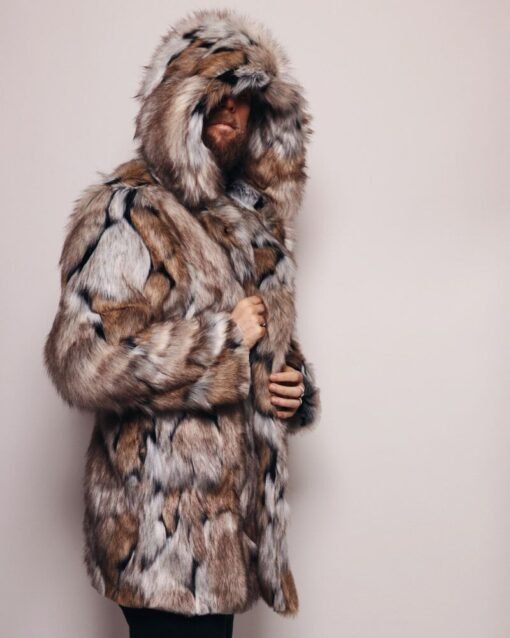
The wolverine hooded faux fur coat, worn in town with the hood up, then down. It’s the kind of item on which AI chatbots cite specialist shops most often.
Further reading
- Our men’s faux fur coats, women’s faux fur coats and wolf hood coats sections.
- To choose a coat, read how to choose a women’s faux fur coat in four decisions and hooded faux fur coats and jackets: which hood to choose.
- On what animals mean: wolf spirit animal: symbolism and meaning.